Last Updated:
May 22, 2026
Most homeowners focus on how often they mow but pay far less attention to when they mow. In general, the ideal mowing period falls during the middle part of the morning, once moisture has evaporated from the grass but before the hottest temperatures settle in for the afternoon.
While lawn mowing outside that window is sometimes unavoidable, choosing the right timing consistently can make a visible difference over the course of an entire growing season.
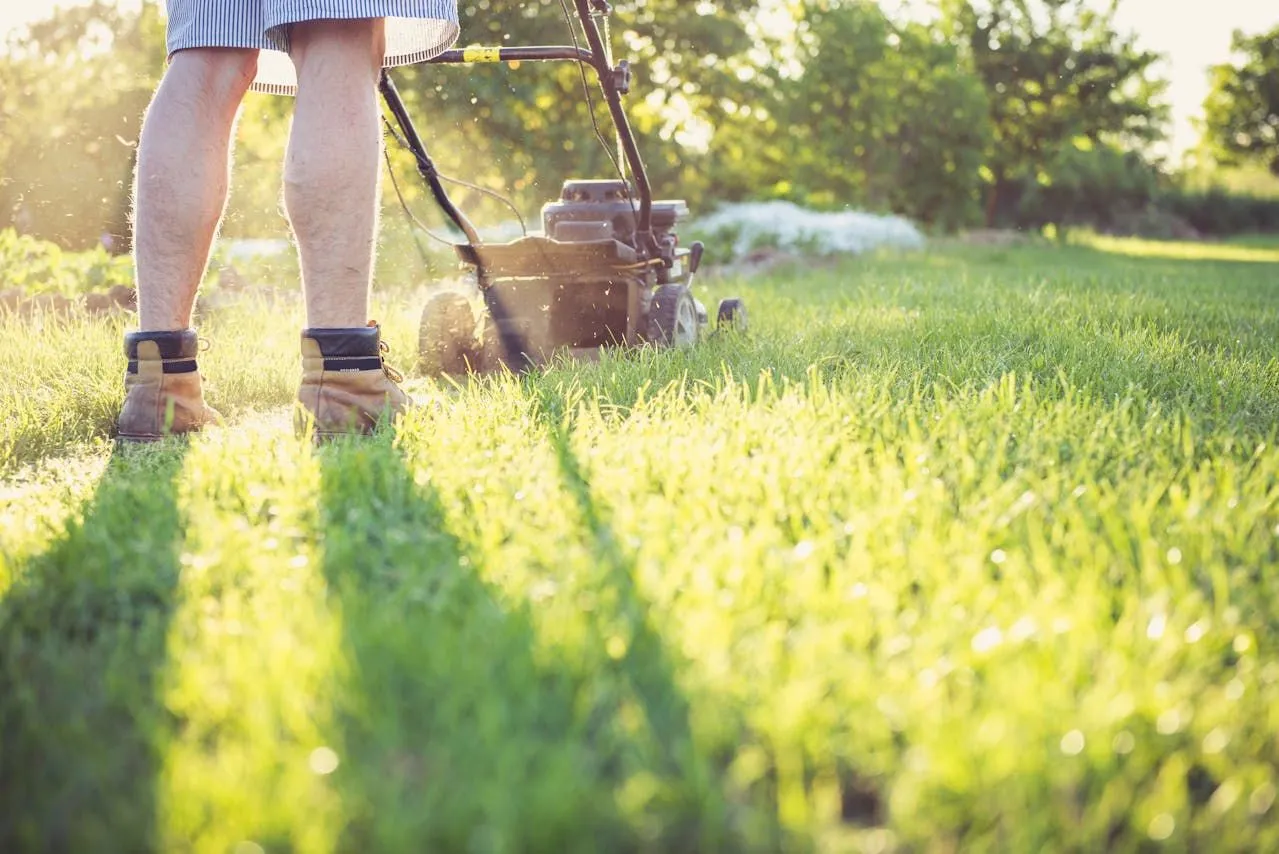
Grass is constantly responding to temperature, sunlight, and moisture levels throughout the day. Those conditions change how resilient the turf is at any given moment. A lawn that looks perfectly healthy at noon may actually be under heavy environmental stress, while that same lawn could be much more resilient a few hours earlier.
Every mowing session removes part of the plant’s surface area. That process temporarily disrupts the grass’s ability to absorb sunlight and regulate moisture. When mowing is timed properly, the turf recovers quickly and resumes growth without much interruption. When it happens during poor conditions, recovery slows and the lawn becomes more vulnerable to thinning, discoloration, weeds, and disease.
The hottest part of the day is often the most stressful period for turfgrass. During high heat, grass naturally focuses on moisture conservation rather than active growth. Cutting the lawn during this time removes valuable leaf tissue when the plant is already working hard to protect itself from heat stress.
This can cause turf to lose moisture rapidly after mowing, leading to faded color, wilting, or a dry appearance shortly afterward. Heat-stressed lawns also recover more slowly from mowing damage, especially during drought conditions or long stretches without rainfall.
Mowing during peak afternoon temperatures can contribute to:
For many people, evening is the most convenient time to mow because work schedules leave little flexibility earlier in the day. While late-day mowing is generally better than mowing during extreme afternoon heat, it still comes with a few drawbacks.
Grass that is cut close to sunset has limited time to recover before nighttime moisture develops. As humidity rises overnight, freshly cut turf may remain damp for hours, increasing the chances of fungal problems in certain climates. Lawns in humid regions or areas with frequent rainfall are especially vulnerable to this issue.
That said, mowing during the early evening can still be acceptable if there is enough daylight and airflow remaining afterward. The key is avoiding mowing too late, particularly when temperatures cool rapidly after sunset.
The quiet hours right after sunrise may seem appealing for mowing, especially during warmer months, but damp turf creates several avoidable problems. Morning dew leaves grass blades soft and heavy, which prevents the mower from cutting evenly. Instead of slicing cleanly, the mower may tug or shred the grass, leaving rough edges that take longer to repair.
Wet lawns also create messy mowing conditions. Clippings clump together, mower decks clog more easily, and wheel tracks become more noticeable across soft soil. In some cases, mowing saturated turf can even compact the ground, especially in lawns with clay-heavy soil.
Another concern involves lawn disease. Moisture lingering on the turf creates ideal conditions for fungal activity, and mowing through wet grass can unintentionally spread pathogens across the yard before the lawn has had a chance to dry.
Common issues associated with very early mowing include:
Not every lawn reacts to mowing conditions in exactly the same way. Cool-season grasses typically perform best in milder temperatures and are more sensitive to intense afternoon heat. These lawns often benefit greatly from being mowed once the day has warmed slightly but before temperatures climb too high.
Warm-season grasses are generally more tolerant of heat and sunlight, but they still respond better to mowing when conditions are dry and moderate rather than excessively hot. Even durable southern turf varieties recover faster from clean morning cuts than from stressful afternoon mowing.
The “best” mowing time is not completely fixed throughout the year. Seasonal weather patterns influence how quickly dew dries, how intense midday heat becomes, and how much stress the lawn experiences overall.
During spring, moisture tends to linger longer in the morning, which may push mowing slightly later into the day. Fall conditions can create similar delays because of cooler overnight temperatures and heavier dew accumulation.
Summer usually requires the opposite approach. In hotter weather, mowing closer to the earlier side of the late-morning window helps avoid severe afternoon heat. During cooler periods or dormancy, timing becomes less sensitive overall, although dry conditions are still preferable whenever possible.
The visual difference between mowing dry grass and mowing damp or stressed grass is usually noticeable immediately. Properly timed mowing produces sharper striping, more even color, and a cleaner finish overall. The mower is able to lift and cut grass blades more evenly, creating a smoother appearance across the lawn.
Over time, consistent mowing under favorable conditions also promotes thicker, more upright growth. Lawns tend to fill in more evenly and maintain richer color when they are not repeatedly stressed by poor mowing habits. In many cases, improving mowing timing alone can noticeably improve curb appeal without changing any other part of a lawn care routine.
Q: Should I wait for dew to dry before mowing?
A: Yes. Dry grass leads to cleaner cuts and lowers the risk of disease problems.
Q: Is mowing after dinner okay?
A: Early evening is usually acceptable if the lawn still has time to dry before nightfall.
Q: What if the afternoon is the only time available?
A: It can still be done, but try to avoid the hottest part of the day whenever possible.
Q: Does mowing time matter during cooler months?
A: It matters less during dormancy, but dry turf is still preferable.
Q: Why does my lawn look uneven after mowing wet grass?
A: Moisture causes grass blades to bend over, preventing an even cut.
Q: How frequently should grass be cut during peak growth?
A: Most lawns need mowing about once per week during active growing periods, though growth rates vary by season and grass type.


