Last Updated:
April 21, 2026
Aeration is one of those lawn care services that often gets overlooked until problems start to show. Unlike mowing or watering, the need for aeration is not always immediately obvious. Many lawns appear green on the surface but struggle below ground with compacted soil, poor root development, and limited airflow.
When the soil becomes compacted, even the best fertilization and watering practices become less effective. Aeration addresses this issue directly by relieving compaction and creating pathways for essential elements to penetrate deeper into the soil.
Aeration involves removing small plugs of soil from the lawn to reduce compaction and improve overall soil structure. This process may seem simple, but it has a powerful impact on how your lawn absorbs water, nutrients, and oxygen.
When soil becomes dense and tightly packed, grassroots struggle to expand. This leads to shallow root systems that are more vulnerable to drought, heat stress, and wear. Aeration breaks up that compacted layer, allowing roots to grow deeper and stronger.
However, aeration is not something every lawn needs all the time. Lawns that already have loose, well-balanced soil may not benefit as much from the process. The key is identifying when your lawn has crossed the threshold where compaction is limiting its performance. Without that understanding, aeration can either be underused or applied unnecessarily.
Many of the most common lawn problems actually originate beneath the soil, even if they appear above ground. Compacted soil creates a chain reaction that affects everything from water absorption to grass density.
Most symptoms often develop gradually, which is why they are easy to ignore at first. Over time, however, they can significantly impact the overall health and appearance of your lawn. Common signs your lawn may need aeration:
One of the most common causes of soil compaction is repeated pressure from foot traffic. Lawns that are frequently used for recreation, pets, or gatherings are especially prone to becoming compacted.
Each step presses soil particles closer together, reducing the space needed for air and water movement. This effect is even more noticeable in areas where traffic is concentrated, such as walkways, play areas, or near patios.
If parts of your lawn seem more worn down than others or struggle to maintain consistent growth, compaction from traffic may be the underlying cause. Aeration helps relieve this pressure and restores balance to these high-use areas.
Thatch is a layer of organic material that accumulates between the grass blades and the soil surface. While a thin layer can be beneficial, excessive thatch creates a barrier that prevents water and nutrients from reaching the roots.
When combined with compacted soil, thick thatch can severely limit your lawn’s ability to thrive. It can also create an environment where pests and diseases are more likely to develop.
Aeration helps break through this layer, improving contact between the soil and the elements your lawn needs to grow. If your lawn feels spongy underfoot or you notice a thick, fibrous layer at the surface, it may be time to consider aeration.
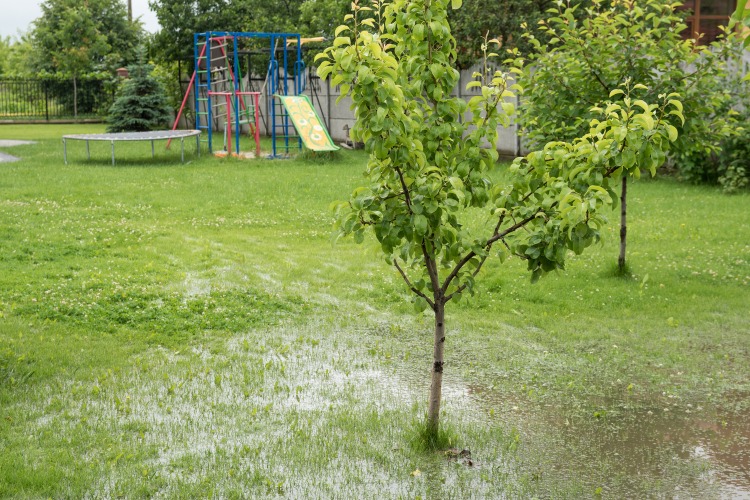
Water behavior is one of the clearest indicators of soil health. In a well-aerated lawn, water soaks into the soil evenly and reaches the roots where it is needed most. In compacted lawns, water often sits on the surface or runs off instead of being absorbed. This not only wastes water but also deprives the roots of consistent moisture.
On the opposite end, some compacted soils can become so dense that they trap water near the surface, leading to soggy conditions and increased disease risk. Aeration helps regulate this balance by improving both drainage and moisture retention
Healthy grass depends on strong, deep root systems. When soil is compacted, roots are unable to expand properly and remain shallow. This makes the lawn more sensitive to environmental stress and less capable of recovering from damage.
You may notice that your lawn struggles during hot weather or shows signs of stress more quickly than expected. Even with proper watering and fertilization, growth may remain slow or uneven. Aeration creates the space roots need to grow deeper, which improves the lawn’s ability to withstand drought, resist disease, and maintain consistent color and density.
Not every lawn requires regular aeration. Lawns with loose, well-maintained soil and minimal traffic may continue to perform well without it. In these cases, other services such as proper mowing, watering, and fertilization may be enough to maintain healthy growth.
If your lawn absorbs water easily, maintains thick, even coverage, and shows consistent growth throughout the season, aeration may not provide a noticeable benefit. Understanding your lawn’s current condition helps you avoid unnecessary treatments and focus on what it truly needs.
Q: How often should I aerate my lawn?
A: Most lawns benefit from aeration once per year, although heavily used or compacted lawns may require more frequent treatment.
Q: Can I aerate my lawn myself?
A: Yes, but professional equipment typically provides deeper and more consistent results, especially for severely compacted soil.
Q: Will aeration damage my lawn?
A: Aeration temporarily disturbs the soil, but it does not harm healthy grass. In fact, it encourages stronger growth.
Q: How long does it take to see results after aeration?
A: Improvements in water absorption and soil condition can happen quickly, while visible growth improvements typically develop over several weeks.
Q: Should I water after aeration?
A: Yes, watering after aeration helps the soil settle and allows nutrients to move more easily into the roots.
Q: Can aeration help with weeds?
A: Indirectly, yes. Aeration makes it harder for weeds to establish and spread by strengthening your lawn and making grass grow more densely to crowd out weeds.


