Last Updated:
April 21, 2026
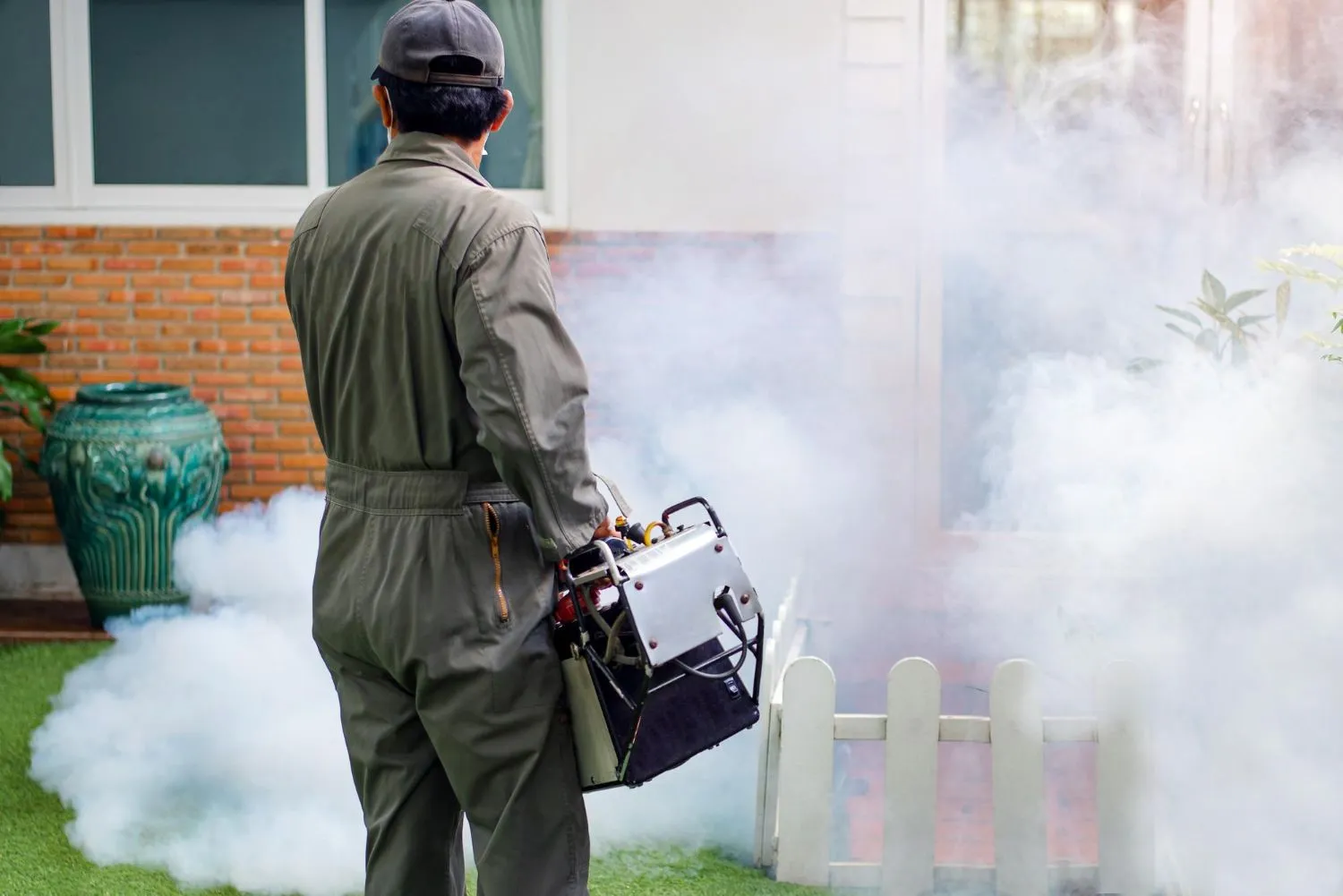
The backyard is where kids run around, pets explore, and families spend time relaxing outdoors. Because of that, it’s completely normal to question whether mosquito control treatments are safe to use in spaces where people and animals spend time. Rest assured, professional mosquito control is safe for kids and pets.
Mosquito sprays used by professional services today are designed with residential environments in mind. Keep reading to learn more, and check out our mosquito control program for the Chantilly area!
Mosquito treatments don’t simply coat a yard with chemicals. Instead, they are typically applied as targeted barrier treatments that focus on the places mosquitoes naturally gather during the day. Mosquitoes spend most of their time resting in shaded vegetation, under leaves, and in dense shrubbery where moisture and protection are available.
Professional mosquito control treatments are designed to settle on these surfaces so that mosquitoes encounter the product when they land or hide in those areas. The ingredients interfere with the insects’ nervous systems, which reduces the mosquito population over time. Because the treatments are concentrated in specific locations where mosquitoes hide, the overall exposure across the yard remains limited.
One of the most important parts of any mosquito treatment is allowing the product to dry completely before people or pets return to the yard. During application, the treatment is applied in a liquid form so it can evenly coat plant surfaces. Once the moisture evaporates, the remaining product binds to those surfaces and becomes far less transferable.
After this drying process occurs, casual contact with grass or shrubs is unlikely to result in meaningful exposure. For this reason, mosquito control providers usually recommend waiting a short period before letting children or animals back outside.
The process usually looks like this:
Although mosquito products are widely available, professional application plays a major role in maintaining safety and effectiveness. Licensed technicians are trained to follow product labels precisely, which includes proper dilution rates, targeted application methods, and correct coverage areas.
This training helps prevent issues like overapplication or spraying areas where treatments are unnecessary. Professionals also understand where mosquitoes are most likely to rest during the day, allowing them to focus treatment efforts where they will be most effective.
Professional mosquito technicians typically:
Another factor that reassures many homeowners is that mosquito control products are heavily regulated. In the United States, pesticide products must undergo extensive testing before they can be approved for residential use. Regulatory agencies evaluate toxicity levels, environmental impact, and safe usage guidelines before allowing these products to be sold or applied.
Because of these regulations, the products used in professional mosquito control programs are designed to be used safely when directions are followed. This doesn’t mean they should be used carelessly, but it does mean they have passed strict safety standards intended to protect people, pets, and the environment.
Professional mosquito control providers do more than simply spray the yard—they also identify areas that should not be treated. This is an important part of maintaining a safe environment, especially in homes where children and pets frequently interact with outdoor objects.
Technicians commonly avoid areas where direct contact is more likely, and they often recommend removing certain items from the lawn prior to treatment.
Common areas that are typically avoided include:
Although mosquito treatments are designed to be used responsibly, homeowners can take a few easy precautions to further reduce exposure. These steps are simple and help ensure the treatment works as intended without unnecessary contact. Families can enjoy mosquito relief by following a few common-sense practices.
Helpful precautions include:
Q: How long should children and pets stay indoors after mosquito treatment?
A: In most situations, families should wait until the treatment has dried completely. This typically takes about 30 minutes to a few hours depending on humidity and weather conditions.
Q: Can mosquito treatments harm dogs or cats?
A: When applied according to product directions and allowed to dry properly, mosquito treatments are generally considered safe for pets. Problems are more likely if animals are exposed during or immediately after application.
Q: Is it safe for kids to sit or play on the grass after treatment?
A: Yes, once the treated surfaces have dried and the yard is cleared for reentry, normal outdoor activities such as running or sitting on the lawn are generally safe.
Q: What should I do if my dog goes outside before the lawn is ready?
A: If your pet walks through treated areas too soon, washing their paws with mild soap and water is usually enough to remove any residue.
Q: Do mosquito treatments have a strong smell or lingering residue?
A: Most modern mosquito control products have minimal odor and do not leave noticeable residue once they dry.
Q: How often are mosquito treatments usually applied?
A: Many mosquito control programs involve treatments every three to four weeks during peak mosquito season to keep mosquito populations under control.


