Last Updated:
October 24, 2026
When rainwater collects in your driveway, floods a low spot in your yard, or pools near your patio, a catch basin may be part of the solution. This drainage feature collects water at the surface and directs it into an underground pipe, helping move excess runoff away from areas where it can cause problems.
Catch basins are commonly used in residential landscaping because they can handle water that accumulates quickly during heavy rainfall. However, installing one is only part of an effective drainage plan. Its location, pipe connections, and outlet all play a role in how well the system performs.
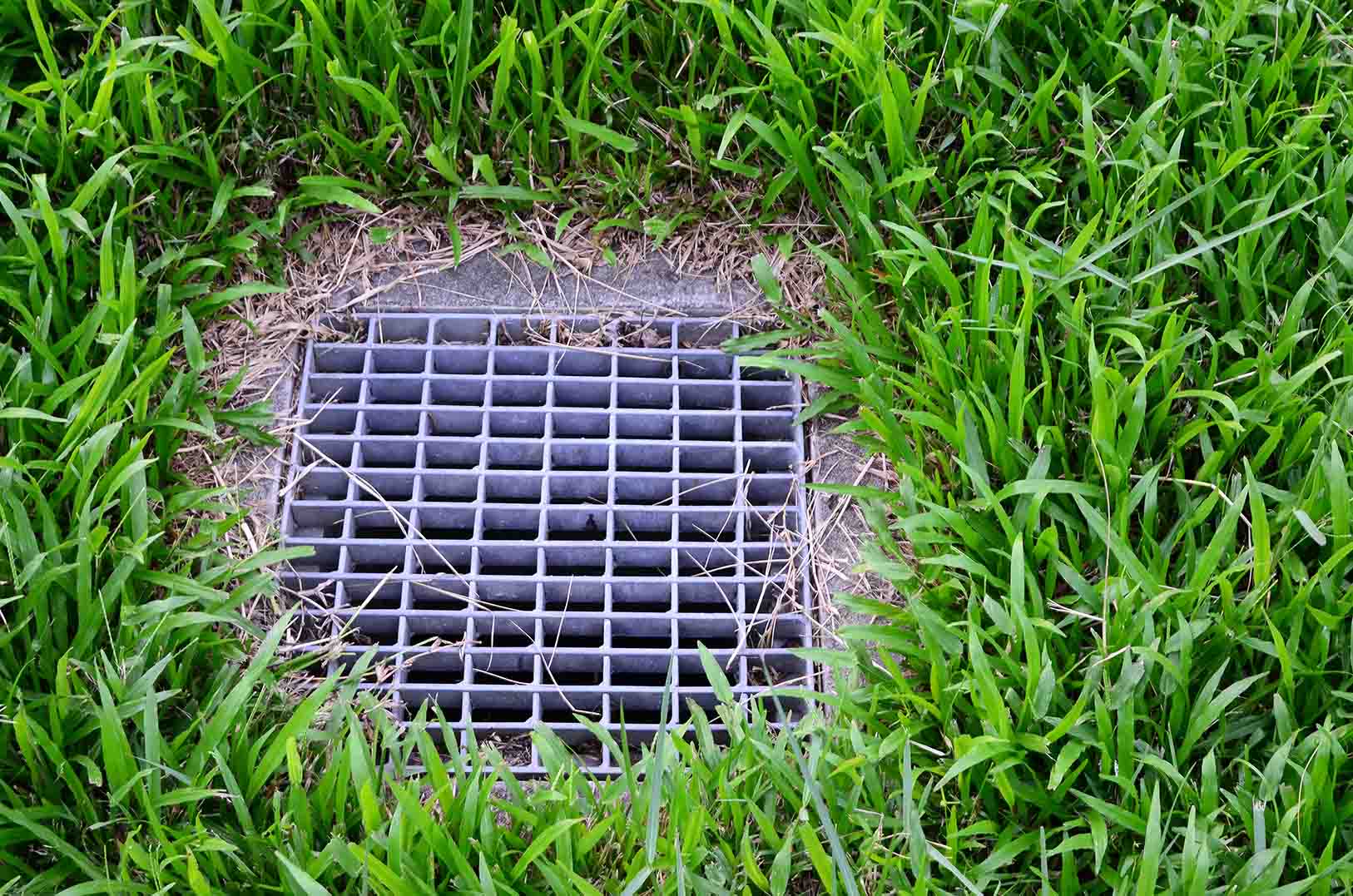
A catch basin provides a collection point for surface water. It typically consists of a buried container with a grate at ground level. Water flows through the grate into the basin, where heavier debris can settle before the water enters a connected drainage pipe.
Catch basins are often installed in low-lying areas where water naturally gathers. They can also be placed near driveways, patios, and other hard surfaces that prevent rainwater from soaking into the ground.
A properly designed catch basin can help:
Some catch basins also include removable baskets or other debris-collection features that make maintenance easier. Although catch basins vary in size and design, most residential systems contain a few basic components.
Grate: The visible cover allows surface water to enter while helping keep larger objects out of the basin.
Basin: The underground container receives the incoming water and provides space for some sediment to settle.
Drainage pipe: A connected pipe carries collected water away from the basin.
Outlet: The outlet connects the system to its designated discharge point, which must be suitable for the amount of water being handled and comply with applicable drainage requirements.
The best location depends on where water accumulates and how runoff moves across the property. Installing a basin in the wrong place may leave the main drainage problem untouched.
Before installation, the property's grading and water flow should be evaluated. A catch basin may also need to be combined with regrading, downspout adjustments, or additional drainage features.
Common locations include:

Catch basins and French drains both help manage excess water, but they collect it differently. A catch basin primarily captures water flowing across the ground. Its grate allows runoff to enter the basin before traveling through a drainage pipe.
A French drain is installed underground and uses permeable drainage material surrounding a perforated pipe to collect water moving through saturated soil.
The distinction matters when selecting a solution. If rainwater rushes across a driveway and gathers in a depression, a catch basin may be appropriate. If soil stays wet because water is moving underground, a French drain may be more suitable.
Leaves, grass clippings, mud, and other debris can accumulate inside a catch basin. If sediment builds up or the grate becomes blocked, water may enter the system more slowly or back up during rainfall.
Catch basins should be checked more frequently during seasons when leaves and yard debris are common. Any significant blockage or suspected pipe damage may require professional attention.
Basic maintenance includes:
A catch basin is worth considering when surface water repeatedly collects in a specific location and needs to be carried away through a drainage pipe. It can be especially useful around driveways, patios, and low sections of a landscape.
However, not every wet spot needs a catch basin. Poor grading, compacted soil, leaking irrigation lines, and water coming from downspouts can all contribute to drainage problems. Identifying the source helps prevent installing a system that treats only part of the issue. The goal is to collect water efficiently and direct it somewhere appropriate without creating new problems elsewhere on the property.
Q: What is the purpose of a catch basin?
A: A catch basin collects surface runoff through a grate and directs it into a connected underground drainage pipe.
Q: Does a catch basin prevent flooding?
A: It can reduce localized water accumulation when properly sized and connected to an effective drainage outlet. It cannot prevent every type of flooding or handle unlimited runoff.
Q: How often should a catch basin be cleaned?
A: Inspect it periodically and clean it whenever debris or sediment begins interfering with drainage. Properties with many trees or heavy runoff may need more frequent attention.
Q: Can a catch basin be installed in a lawn?
A: Yes. Catch basins are often installed in low spots in lawns where surface water collects, provided the system has a suitable outlet.
Q: Is a catch basin the same as a storm drain?
A: Not exactly. A catch basin is a type of surface-water collection structure that may connect to a larger storm drainage system. The terms are sometimes used interchangeably in casual conversation, but they can refer to different parts of a drainage network.


