Last Updated:
October 24, 2026
Not all drainage problems look the same. Water may collect in a low spot in the yard, spread across a patio, or run toward a garage whenever it rains. Choosing the right drainage system starts with understanding where the water is coming from and how it needs to be collected.
Surface drains and trench drains are two common options for controlling runoff, with surface drains being level with the ground and trench drains being dug slightly below the surface. Both collect water at ground level, but their designs make them better suited to different situations. Knowing how they compare can help homeowners choose a drainage system that fits their property rather than relying on a solution that may not address the actual problem.
A surface drain collects water through an opening at ground level. Many residential systems use a grated catch basin installed in a low spot, where runoff can enter and flow through an underground pipe.
These drains are useful when water naturally gathers in a particular location. Instead of allowing it to sit on the lawn or paved surface, the drain captures it and sends it toward a suitable outlet.
Surface drains are commonly used in:

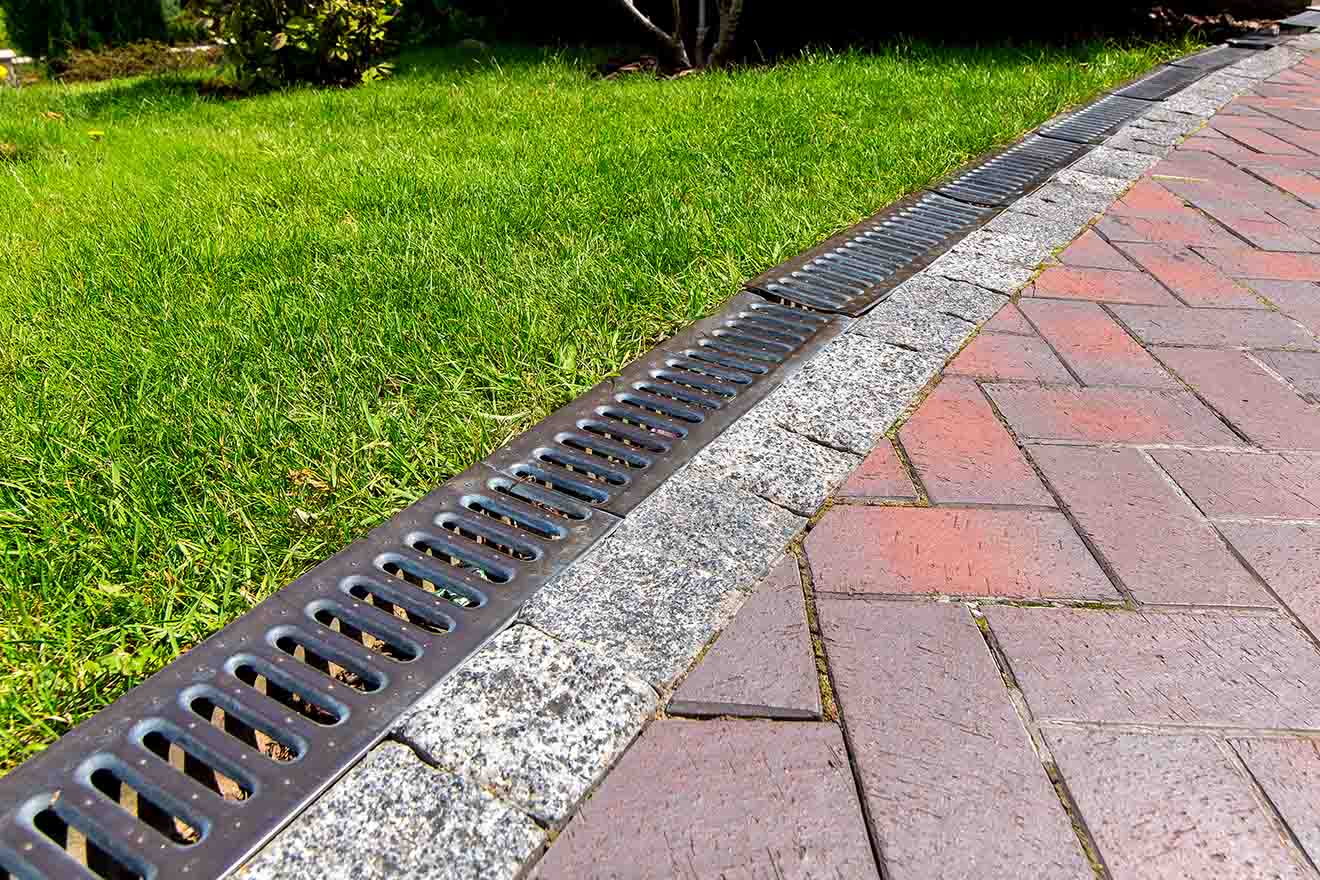
A trench drain is a long, narrow drainage channel covered by a grate. Rather than collecting water at a single opening, it captures runoff along a linear section of the ground.
The channel directs water toward an outlet, which may connect to an underground drainage pipe. Trench drains are especially useful along the edges of paved areas or wherever water moves across a broad surface toward a specific boundary.
Typical applications include:
The layout of the driveway determines which option makes more sense. A surface drain may work well if water collects in a specific depression. The basin captures the runoff at that point and directs it into a pipe.
A trench drain may be more effective if water flows across the driveway toward a garage door or enters from a sloping section of pavement. Installing a channel across the path of the runoff can intercept water before it reaches the building.
In some cases, grading improvements are also necessary. A drain cannot compensate for every slope problem, especially if large volumes of water bypass the collection point.
Both drainage systems need proper planning, but their installation requirements differ. A surface drain requires a correctly positioned basin, suitable grading, and a pipe that carries water to an appropriate outlet. The basin also needs enough capacity to handle the expected runoff.
A trench drain requires excavation along a longer stretch of ground. The channel must be supported properly, and the grate needs to withstand the loads expected in that location. A drain installed in a driveway, for example, may need to support vehicle traffic.
Homeowners should periodically remove debris, inspect the outlet, and check whether water drains away promptly during rainfall. Trench drains may require cleaning along the full length of the channel, while surface drains may need sediment removed from the basin.
Surface drains and trench drains primarily address water that flows across the ground. If the soil itself remains saturated, a different approach may be necessary.
For example, a lawn that stays soggy for days after rainfall may have compacted soil or subsurface water issues. A French drain, soil improvements, or grading changes could be more appropriate, depending on the cause.
Before installing any drainage system, consider:
Surface drains and trench drains both help control runoff, but they serve different purposes. A surface drain is generally suited to a localized collection point, while a trench drain is designed to intercept water along a longer stretch of ground.
The best choice depends on the shape of the property, the location of the water, and the amount of runoff that needs to be managed. In some situations, correcting the slope or adding a different drainage method may be just as important as selecting the drain itself.
By understanding how water moves across your property, you can choose a drainage system that protects paved areas, reduces standing water, and helps keep outdoor spaces usable after rainfall.
Q: Are surface drains and trench drains the same thing?
A: No. Surface drains often collect water through a single grated opening, while trench drains use a long channel to capture runoff across a wider area.
Q: Are trench drains good for driveways?
A: Yes. Trench drains are often installed across garage entrances or along driveways to intercept runoff before it reaches a building or another vulnerable area.
Q: Do surface drains need underground pipes?
A: Most residential surface drains connect to a drainage pipe that carries water away from the collection point. The outlet must be suitable for the amount of water being discharged.
Q: Which type of drain is easier to maintain?
A: A surface drain may be simpler to clean because debris often collects in one basin. A trench drain requires cleaning along the channel, although maintenance needs depend on the system's design and surrounding conditions.
Q: Can surface drains and trench drains be used together?
A: Yes. A property may use both systems to collect runoff from different areas. The layout should be designed so each drain has sufficient capacity and an appropriate discharge route.
Q: Will either system fix a soggy lawn?
A: Not necessarily. These systems are primarily designed to collect surface runoff. If the problem comes from saturated soil, poor grading, or subsurface water movement, other drainage improvements may be needed.


